
Introduction: Why This Decision Matters More Than Ever in 2026
When it comes to acquiring a green card, making the choice between adjustment of status or consular processing has often proven to be one of the key decision-making factors for immigrants to the United States.
However, the rationale behind this decision and the selection of the optimal green card process have become much more complicated than before in 2026.
As the visa bulletin waiting time increases, embassies start facing delays and visa suspensions become increasingly random and difficult to predict. This is the reason why immigrants currently in the middle of their application process need to determine which green card strategy will work for them.
Understanding the Basics: Two Paths to the Same Goal
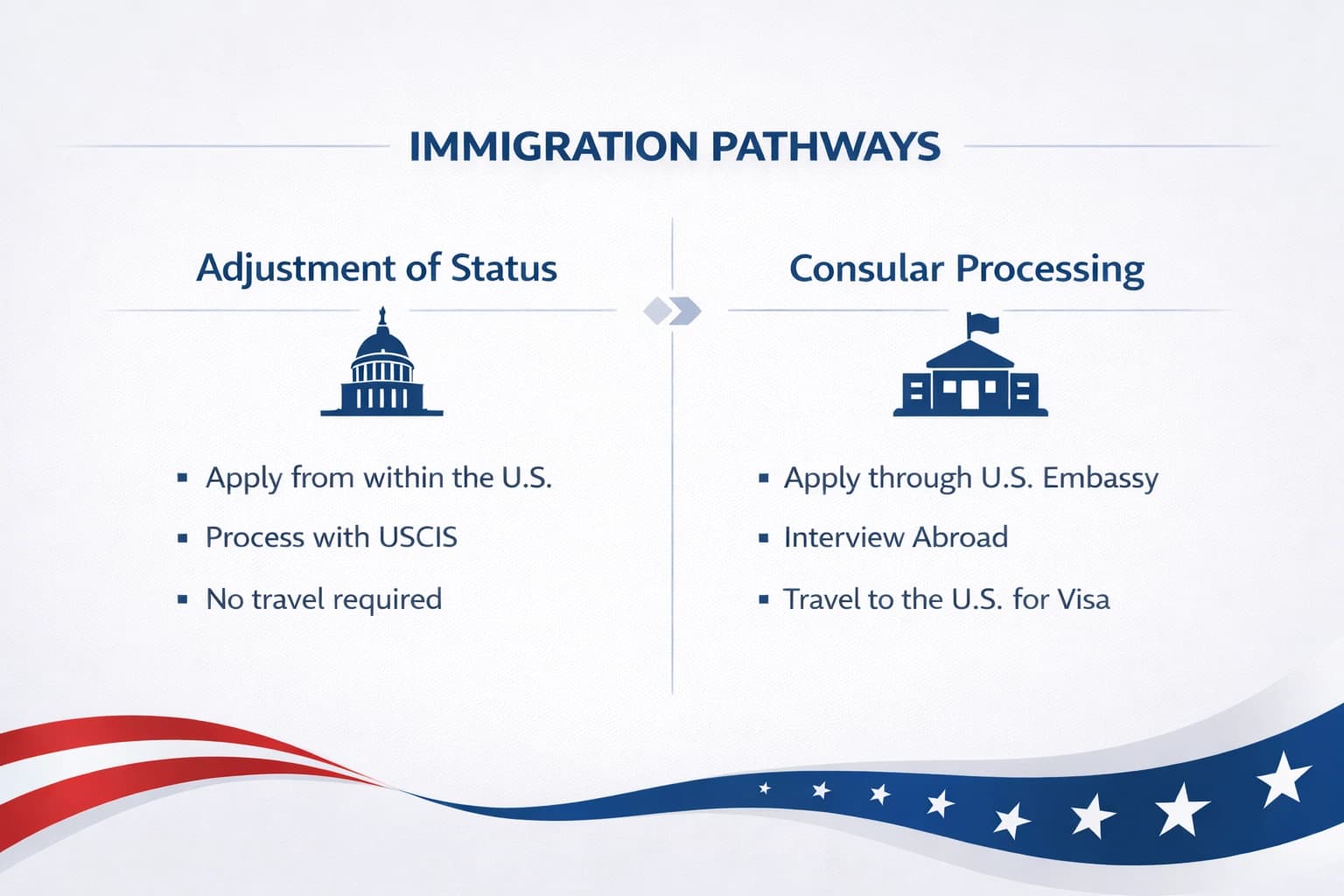
Before diving into strategy, it is important to understand how these two pathways function within the broader immigrant visa steps.
What is Adjustment of Status (AOS)
Adjustment of Status allows applicants who are already inside the United States to apply for a green card without leaving the country. This process is handled entirely within the U.S. immigration system.
Applicants can often remain in the U.S. while their case is pending and may also receive work and travel authorization during the process.
The 2026 Reality: Visa Bulletin Delays and Processing Uncertainty
The visa bulletin backlog is one of the major problems that both paths face. By 2026, some employment-based and family-based preference classes still suffer from considerable retrogression.
As per the latest development, waiting periods for some preference classes may reach up to a few years, especially for highly popular countries. As a result, it forces the candidates to reconsider their strategy.
Furthermore, the processing activities at some embassies have not yet returned to normalcy after experiencing past disruptions.
Adjustment of Status vs Consular Processing: Key Differences in 2026
Choosing between these two options now requires a deeper understanding of real-world obstacles rather than just theoretical differences.
Processing Times and Reliability
Adjustment of Status applications typically involve greater reliability as applicants will be inside the country. Nonetheless, processing times can differ based on case type and current workload.
In contrast, Consular Processing involves shorter application processing time in theory, yet depends greatly on embassy availability. The scheduling of the interview is what can cause delays in many cases.
Possible Risks
The most significant benefit of Adjustment of Status lies in its lesser risks for the applicant. This procedure does not involve travel out of the United States, thus making visa reentry impossible.
Consular Processing is considered highly risky nowadays, due to possible changes in immigration policies. Such alterations can affect applicants that are currently abroad and waiting for approval.
Traveling and Working Rights
Applicants of AOS can obtain employment authorization, along with advanced parole to continue working and traveling during the green card process.
As far as Consular Processing goes, applicants will not have access to these rights as they are supposed to stay abroad.
When Adjustment of Status Is the Right Choice
In the year 2026, AOS will likely be the better choice of procedure for those who are in the country legally.
AOS will suit someone who:
- Does not want the dangers of overseas travel
- Has to remain in employment within the U.S.
- Prefers a procedure that is less risky and more predictable.
Many applicants have found the AOS process more secure than others because of the global uncertainty.
When Consular Processing Is The Superior Choice
Even with its downsides, Consular Processing remains an excellent choice in certain circumstances.
This option tends to suit:
- Applicants residing abroad
- People lacking legitimate status in the United States
- Circumstances where the applicant cannot benefit from AOS
In certain situations, Consular Processing could actually take less time than AOS if the processing office works effectively within a certain area.
Real Obstacles Faced by Applicants at Present
The choice between Adjustment of Status and Consular Processing is no longer based on preference alone. Rather, it is based on the obstacles that applicants are actually facing in the real world.
Among the most frequent hurdles faced by applicants are:
- Retrogression in Visa Bulletin rendering one ineligible
- Interview delays at embassies
- Unpredictable policy alterations or visa cancellations
- Higher requirements for documentation
This calls for proper planning and flexibility.
2026 Step by Step Decision Making Process
To make the correct decision, we must not rely on luck. Below is a simple process that one can undertake.
Step 1: Assessing Current Status
Where one is in relation to their geographical location will dictate their next steps. It is wise for those who currently have valid status to use the adjustment of status process.
Step 2: Analyzing Visa Bulletin Position
One must look at their position as per the visa bulletin. Delays are important when making the decision in terms of which method to adopt.
Step 3: Assessing Risk Factor
One should also consider how risky they can afford to be when making decisions. Those seeking to minimize risks will opt for the adjustment of status option.
Step 4: Evaluating Processing Speed in One’s Location
If one intends to go the consular route, they should consider the speed of processing in their location.
Step 5: Making the Decision Consistent with the Overall Strategy
Your decision should align with your broader green card strategy, including career plans, family considerations, and long-term goals in the United States.
Immigration Strategy 2026
Strategies for immigrating have become very strategic. Applicants have stopped looking for one path and started creating strategies for immigration that change depending on situations.
For instance, applicants who want to get their green card plan both AOS and Consular Process ways of getting their visas depending on what happens in the visa bulletin.
Such strategies have become necessary since there are many variables involved in the modern immigration system.
Importance of Legal Advice for Immigrant Visa
Since immigrants face several challenges when trying to acquire immigrant visas due to complicated procedures, seeking help from a good immigration lawyer may come in handy.
The importance of legal advice includes:
- Knowing which route to take based on prevailing circumstances
- Not making mistakes while filing documents
- Having your documents ready
Immigration 2026 is much more than a procedure; it is a strategy.
Future Prospects: What You Can Expect after 2026
The future for immigration will likely be more organized but increasingly competitive. There will be a drive for efficiency without compromising standards.
Expect delays with visa bulletins in the most popular applications, and you will have to plan accordingly. On the other hand, digital systems might help improve inefficiencies in the process.
Staying up to date and flexible is crucial.
Conclusion: Strategy Trumps Simplicity
The decision of whether to pursue adjustment of status or consular processing is no longer about simplicity but rather is a matter of strategy.
At a time like this, there is a need for an approach that is informed, flexible, and planned strategically. Developing a smart strategy for applying for green cards can be helpful in eliminating delays.
Whether you have just started looking at your options or you are experiencing delays in processing, a strategy may be of great benefit to you.
A strategy will enable you to know how, when, and what documentation route is most appropriate.